

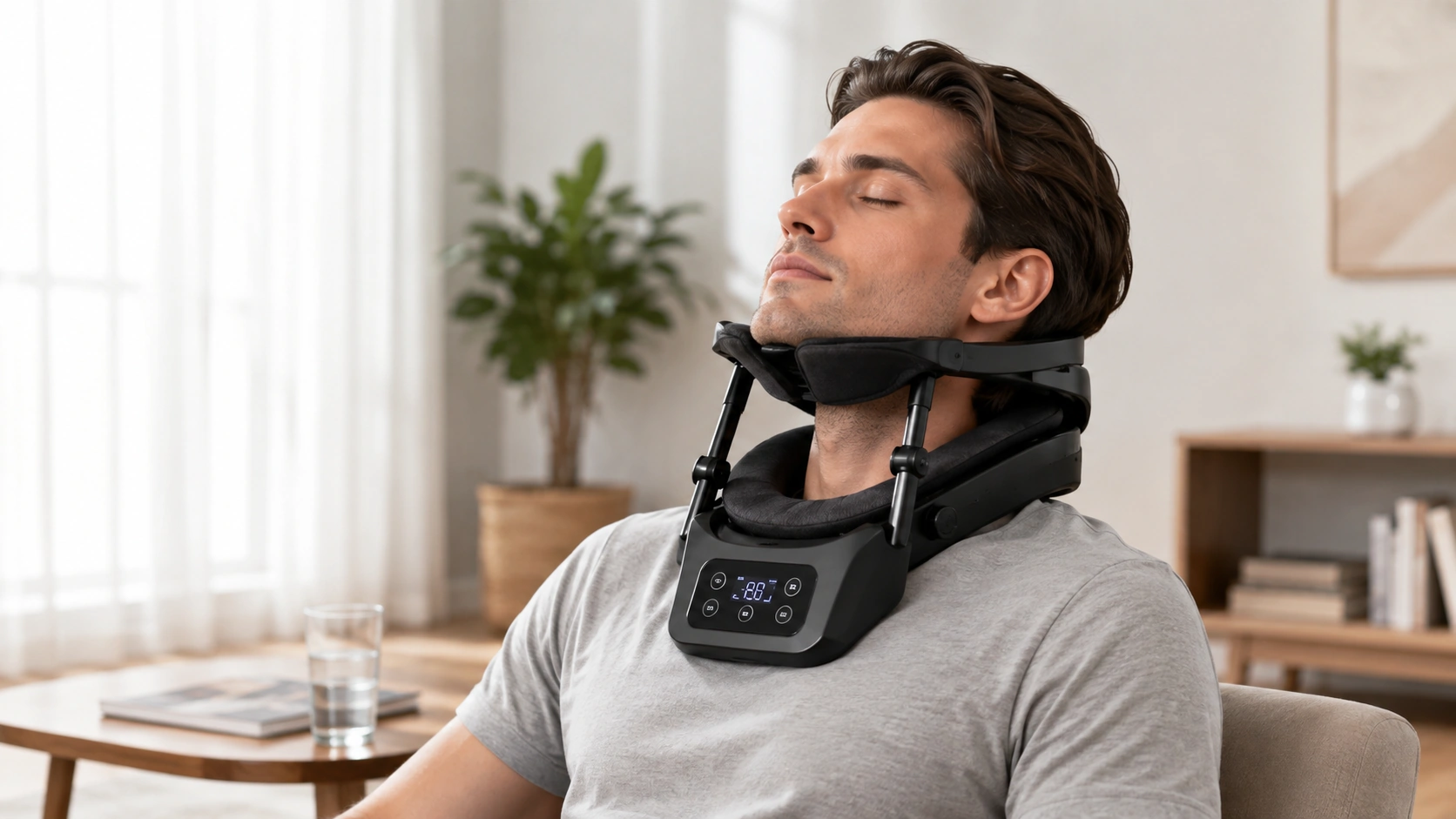
Neck discomfort and stiffness can make everyday activities such as working at a desk, using a phone, driving, or simply relaxing much less comfortable. A Neck Multi-Functional Cervical Traction Device provides a home-use approach to cervical traction and neck relaxation.
Unlike a basic manual neck stretcher, multifunctional cervical traction devices may combine traction with additional features such as heat, electronic stimulation, adjustable settings, and automatic programs. One current product listing for a multifunctional cervical traction device describes dynamic traction along with heat, an LCD, height adjustment, and automatic shut-off.
However, cervical traction is not appropriate for everyone. Use this type of device according to the manufacturer’s instructions, and people with an existing neck condition, recent injury, neurological symptoms, or other medical concerns should speak with a qualified healthcare professional before using traction.
In this review, we’ll look at what a multifunctional cervical traction device does, its potential advantages and limitations, important features to consider, and who may or may not want to consider one for home use.
Disclosure: As an Amazon Associate, we may earn from qualifying purchases made through links on this page. This does not affect the price you pay.
Quick Overview
A Neck Multi-Functional Cervical Traction Device is a home-use device designed to provide controlled traction and other neck-focused functions.
Depending on the particular model, a multifunctional device may combine several features in one unit. Available product information for a current multifunctional cervical traction model lists dynamic traction, heat, height adjustment, an LCD, and automatic shut-off.
Some versions may also include electronic stimulation or massage-style functions. Because features can differ between manufacturers and model versions, it is important to check the exact product listing before purchasing.
This type of device may appeal to people who want a dedicated neck-care device at home rather than relying exclusively on manual stretching.
Potential uses include:
- Home neck traction
- Relaxation after long periods of sitting
- Neck stretching
- Heat-based comfort
- Adjustable traction sessions
- At-home neck-care routines
It should not be treated as a replacement for professional diagnosis or treatment.
Neck Multi-Functional Cervical Traction Device Review
The main attraction of a multifunctional cervical traction device is that it brings several functions together in one piece of equipment.
Traditional neck stretching may involve simple manual exercises or basic mechanical devices. A multifunctional model can provide a more structured experience, with settings designed to control traction and, depending on the model, additional functions such as heat or electronic stimulation.
The available product information for this type of device describes dynamic traction, heat, height adjustment, and an LCD. It is also described as a home-use product intended for the neck area.
The idea behind cervical traction is to apply a controlled pulling force to the neck. The amount and direction of traction are important, which is why proper positioning and following the manufacturer’s instructions are particularly important.
A research review of cervical traction devices notes that cervical traction systems can differ in their design and application, including sitting and supine configurations.
One advantage of a multifunctional design is convenience. Instead of using one product for traction and another for heat or massage-style functions, a single device may provide several options.
That said, having more features does not automatically mean a device is better for everyone.
Comfort, adjustability, ease of positioning, safety features, and whether traction is appropriate for the individual are more important considerations than simply counting the number of functions.
Key Features of a Neck Multi-Functional Cervical Traction Device
Dynamic Cervical Traction
Traction is the central function of this type of device.
Dynamic traction is designed to provide controlled movement or stretching rather than simply holding the neck in one fixed position.
The exact traction method varies between products, so users should always follow the manufacturer’s recommended settings and session duration.
Adjustable Height
Some multifunctional cervical traction devices include height adjustment.
This can be useful because people have different neck sizes and body proportions. Being able to adjust the device can make positioning more comfortable and may help users achieve the intended setup.
Available product information for one current multifunctional model specifically lists height adjustment as a feature.
Heat Function
Heat is another feature found on some multifunctional cervical traction devices.
A heat function can provide a warm sensation around the neck during a session, which some users may find relaxing.
However, heat should always be used according to the manufacturer’s recommended temperature and duration. People with reduced heat sensitivity should take particular care.
LCD Display
An LCD display can make a multifunctional device easier to operate.
Rather than relying entirely on physical buttons, a display can provide information about the selected program or operating settings.
The exact display information depends on the model.
Automatic Shut-Off
Automatic shut-off is a useful safety-oriented feature.
The available specifications for a current multifunctional cervical traction device list auto shut-off.
This can help prevent the device from continuing to operate indefinitely if the user becomes distracted.
However, automatic shut-off should be considered an additional safety feature rather than a reason to leave the device unattended.
Multiple Functions
The “multifunctional” part of the name generally refers to combining traction with additional neck-care functions.
Depending on the model, these can include heat, electronic stimulation, massage-style functions, or different traction programs.
The exact combination should be checked before purchase because similarly named devices can have very different feature sets.
Pros and Cons
Pros
- Combines cervical traction with additional functions
- Designed for home use
- Some models offer adjustable height
- Heat functionality can add another comfort option
- LCD displays can make settings easier to monitor
- Automatic shut-off is available on some models
- Can provide adjustable traction rather than simple manual stretching
- May be convenient for people who prefer structured home sessions
- Multiple functions can reduce the need for separate devices
Cons
- Traction is not appropriate for everyone
- Correct positioning is important
- Multifunctional models can be more complicated than basic neck stretchers
- Comfort can vary from person to person
- Electronic features may not be necessary for every user
- Some devices can be relatively large or heavy
- Results and comfort can vary significantly between individuals
- Medical advice may be appropriate before using cervical traction
Who Should Buy a Neck Multi-Functional Cervical Traction Device?
This type of device may be worth considering for adults who have discussed cervical traction with a healthcare professional and want a structured home-use option.
It can also appeal to people who spend long periods sitting at a computer or looking down at a phone and want a dedicated neck-care routine.
The multifunctional design may be particularly appealing if you prefer having traction and additional features such as heat available in the same device.
People who already have experience with cervical traction may also appreciate having more control over their home sessions.
However, the decision should be based on whether traction is appropriate for you rather than simply whether you experience occasional neck stiffness.
If you have a diagnosed neck condition, previous injury, or unexplained symptoms, getting professional advice before using a traction device is a sensible step.
Who Should Not Buy a Neck Multi-Functional Cervical Traction Device?
A cervical traction device is not something everyone should use.
If you have recently injured your neck, have significant or unexplained pain, numbness, weakness, dizziness, balance problems, or symptoms extending into the arms, it is better to seek medical advice rather than trying traction on your own.
You should also be cautious if you have been diagnosed with a condition affecting the cervical spine, blood vessels, bones, or nerves.
The purpose of this product is not to diagnose or treat a medical condition. It is a home-use device, and the suitability of traction depends on the individual.
If you’re unsure whether traction is appropriate, speak with a doctor, physical therapist, or other qualified healthcare professional before purchasing.
What to Consider Before Buying
Traction Method
Start by understanding exactly how the device applies traction.
Different products use different designs and positions. Some are intended for sitting, while others may be used in a reclining or lying position.
Choose the design that matches the manufacturer’s intended use and your comfort level.
Adjustability
Adjustability can make a significant difference.
Look for a model that allows the user to customize the position or height where appropriate.
A device that doesn’t fit your body comfortably may be difficult to use correctly.
Comfort
Neck traction involves placing the head and neck into a particular position, so comfort matters.
Look at the shape and support areas carefully and consider whether the device appears suitable for your body size.
Heat Settings
If the model includes heat, check how the heat function is controlled.
Adjustable settings can be useful, but you should still follow the manufacturer’s safety instructions.
Controls
A complicated control system can make a device frustrating to use.
An LCD display, clearly labeled buttons, and straightforward programs can make regular use easier.
Safety Features
Automatic shut-off is useful, but also look for clear operating instructions and appropriate adjustment controls.
A traction device should never be used in a way that causes significant discomfort or unusual symptoms.
Size and Storage
Some multifunctional cervical traction devices are considerably larger than simple inflatable neck stretchers.
Check where you will store the device and whether you have enough space to use it comfortably.
Power Requirements
Check whether the device is corded, rechargeable, or battery-powered.
The available specifications for one multifunctional model describe it as a corded electric device, but this can vary between products and versions.
Manufacturer Instructions
This is especially important for traction equipment.
Read the manual before your first session and follow the recommended positioning, session duration, and settings.
Don’t assume that a setting that feels comfortable for another person is automatically appropriate for you.
Neck Traction Device vs. Basic Neck Stretcher
A basic neck stretcher is generally designed around one main purpose: providing a stretching or traction effect.
A multifunctional cervical traction device may offer several additional functions, such as heat, electronic stimulation, display controls, and adjustable settings.
This can make a multifunctional device more versatile, but it can also make it more expensive and complicated.
If you simply want a basic stretching device, a simpler product may be sufficient.
If you specifically want multiple functions and adjustable controls, a multifunctional device may be more appealing.
The important thing is to choose based on your actual needs rather than buying additional features that you will never use.
Neck Traction Device vs. Professional Physical Therapy
A home traction device should not be viewed as a direct replacement for professional physical therapy.
A physical therapist can assess your movement, posture, symptoms, strength, and overall condition before recommending exercises or traction.
A home device, on the other hand, provides a standardized mechanical experience.
For some people, professional guidance may be especially important before starting traction.
If you’re already working with a physical therapist, ask whether a home cervical traction device is appropriate and which type of setup would be most suitable.
How to Use a Neck Multi-Functional Cervical Traction Device
Always begin by reading the manufacturer’s instructions.
Place the device in the recommended position and adjust the height or support settings according to the instructions.
Make sure your neck and head are positioned correctly before starting the traction function.
If the device includes heat or other functions, select them according to the manufacturer’s recommendations.
Start with the recommended settings rather than immediately choosing the strongest available traction.
During the session, pay attention to how you feel.
Traction should not be treated as a competition to achieve the strongest possible stretch.
If you experience significant pain, dizziness, numbness, weakness, or other unusual symptoms, stop using the device and seek appropriate medical advice.
After the session, follow the manufacturer’s instructions for switching off and storing the device.
Frequently Asked Questions
What is a cervical traction device?
A cervical traction device is designed to apply a controlled stretching force to the neck. Different devices use different designs and methods, so the exact experience depends on the product.
Can anyone use a cervical traction device?
No. Cervical traction is not appropriate for everyone. People with certain medical conditions, recent injuries, neurological symptoms, or unexplained neck problems should consult a qualified healthcare professional before using traction.
Does a multifunctional cervical traction device use heat?
Some models do. Available product information for a current multifunctional model lists heat as one of its features.
Is cervical traction the same as a neck massager?
No. A neck massager generally focuses on massage or vibration, while cervical traction is intended to apply a controlled stretching force to the neck. Some multifunctional devices combine traction with massage-style or other comfort features.
How long should I use a cervical traction device?
The appropriate duration depends on the particular device and the individual’s situation. Follow the manufacturer’s instructions and any recommendations provided by your healthcare professional rather than choosing a longer session simply because it feels comfortable.
Can I use a cervical traction device every day?
Daily use should not be assumed to be appropriate for everyone. Follow the manufacturer’s recommended schedule and consult a healthcare professional if you have a neck condition or are unsure how frequently to use traction.
Is a multifunctional cervical traction device worth buying?
It may be worth considering if you have a legitimate reason to use cervical traction and want additional features such as heat, adjustable settings, or electronic functions. If you only need simple stretching, a more basic device may be sufficient.
Final Verdict
The Neck Multi-Functional Cervical Traction Device is designed for people looking for a more feature-rich approach to home cervical traction.
Its main attraction is the combination of traction with additional functions. Depending on the model, features can include adjustable height, heat, an LCD, automatic shut-off, and other neck-care functions.
That makes it more versatile than a simple manual neck stretcher, but it also means that users need to pay closer attention to setup and instructions.
The biggest consideration isn’t simply how many features the device offers. The more important question is whether cervical traction is appropriate for you in the first place.
If a healthcare professional has recommended or approved cervical traction for you and you’re looking for a home-use device with multiple functions, this type of product may be worth considering.
If you have unexplained neck pain, a recent injury, neurological symptoms, or an existing cervical condition, it’s better to get professional guidance before using a traction device.